Tesla’s Roadster Preview: A Human Moment
I watched Tesla’s Roadster demonstration with my children this morning, and all I could think was: wow.
As soon as I first saw it, I went into the other room and put it on YouTube for the family to watch together. I wanted us to share the moment. There was something extraordinary about taking in this feat of human accomplishment together.
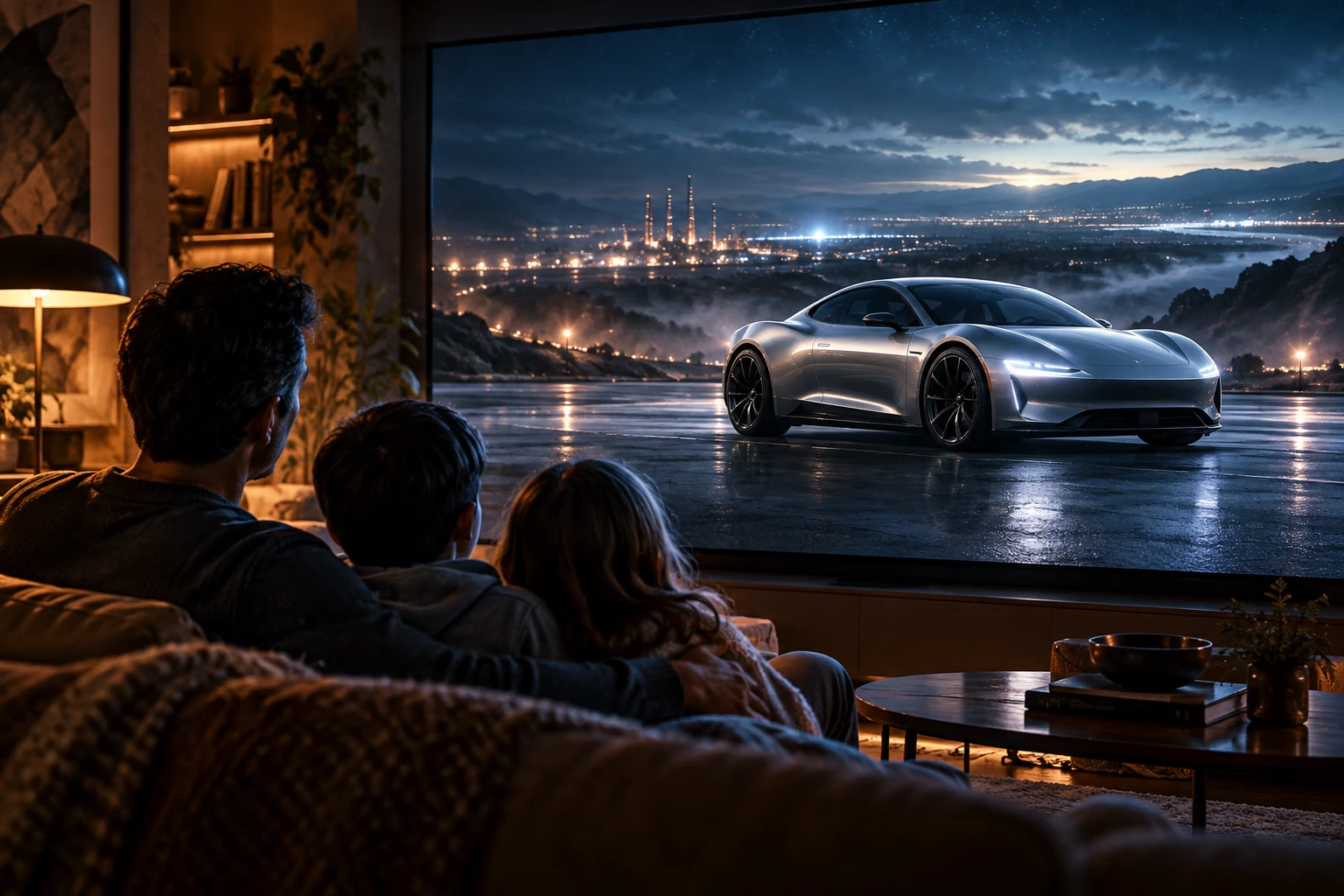
I felt awe. To me, this is what living through the singularity looks like: extraordinary advances becoming part of the world we inhabit.
I’m a big fan of Elon Musk and his companies. What amazes me is how the ambitions behind them connect—and how much they could change the future we’re heading toward.
It’s getting harder to think of the future as something we’ll encounter someday. I find myself trying to make sense of it as it arrives. Developments in AI, science, and engineering keep giving me reasons to reconsider what might be possible and what life could look like for our children.
A demonstration like this leaves me thinking about its implications for transportation, society, and even warfare. Before I’ve absorbed one possibility, another comes into view.
The Roadster preview was one of those moments.
There will be time to understand the details: what ultimately reaches production, how widely these capabilities can be adopted, and how they might change transportation. A demonstration leaves plenty of work ahead. I’m interested in following that work.
But I also want to let myself appreciate what I watched before rushing into every question about what comes next.
And there was another idea alongside the spectacle that I think deserves much more attention.
Musk’s description of the Roadster as Tesla’s last manually driven car stayed with me.
That statement alone could have carried an entire conversation.
For generations, the person behind the wheel has been central to how we understand a car. We think about learning to drive, choosing a vehicle, taking a trip, and having the freedom to go somewhere ourselves. Driving is woven into our relationship with transportation.
Now we’re hearing a company describe a future in which a car designed for a human driver becomes the exception in its lineup.
I see that as an acknowledgment of a shift already underway. The timing and the details will unfold, but the direction feels increasingly clear to me. Our relationship with these machines is changing, and we’re going to have a lot to adapt to.
There’s something remarkable about seeing those ideas meet in one presentation: the excitement of an extraordinary driver’s car, alongside a vision of transportation that moves beyond the driver.
I’m curious about that future. I’m excited, and I’m somewhat nervous. Changes this significant reach into ordinary life—our routines, our work, our families, and the things we take for granted.
My background as a defense contractor also makes me think about what advances in mobility could eventually mean for warfare. That’s a serious subject, with implications that deserve their own discussion. It’s another reminder of how far the effects of new technology can extend.
This morning, though, I was watching with my children.
There will be plenty to understand about what comes next. This morning, I wanted to share the wonder of it with my children. I’m glad we watched it together.